CAMILLE DESISTO
  • ABOUT
    • MOMBA AHY
  • CV
  • RESEARCH
  • PUBLICATIONS
  • Teaching
  • Media
    • Blog

Malagasy Language Learning

2/13/2024

0 Comments

 
During my first research trip to Madagascar in 2017, I yearned to understand the jokes my colleagues told around the campfire, to contribute my own stories and add to the laughter. As a young American woman with elementary language skills, I struggled to find my place on the field team. Thankfully, my colleagues patiently taught me Malagasy words and phrases necessary for life in the forest: ​hazo (tree), ​orana (rain), noana (hungry), etc. These basics went a long way in empowering me to learn more about the forest. I also began to build valuable friendships with my teammates. 

Since then, I have returned to Madagascar on four additional trips to conduct research on the island's unique biodiversity. While there, I am immersed in the Malagasy language. Along with French, Malagasy is the official language of the island. With ~28 million native speakers, Malagasy is the most commonly spoken language in Madagascar, especially outside of major cities. Malagasy's 18 dialects pose a challenge to eager language students such as myself. But, no matter where I travel, I am met with generous people willing to help me on my language learning journey. 
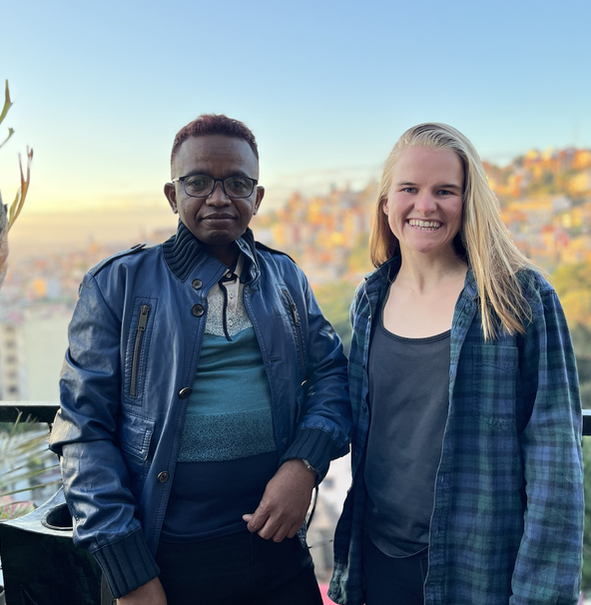
Learning Malagasy is certainly most rapid when I am in Madagascar. Immersion and necessity (not to mention enjoyment!) are hugely motivating. However, back in the US, opportunities to learn Malagasy are hard to come by. I felt this acutely during the COVID-19 pandemic, when I feared that an inability to travel to Madagascar would cause all my progress to unravel. Luckily, I connected with  Lôlô Henri Rafidiniaina (Fidy), founder of Malagasy Lessons for Expats. Based in Madagascar's capital city Antananarivo, Fidy coached me through many Zoom lessons in preparation for my next field expedition. ​We also became good friends, and tutoring sessions soon marked the highlight of my week. 
Picture
Fidy and me in Antananarivo, meeting in person after many Zoom lessons.
Picture
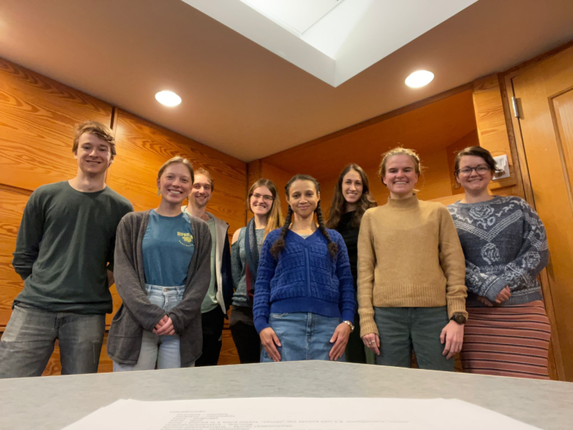
Duke Malagasy students with Tendry during Fall 2022.
Picture
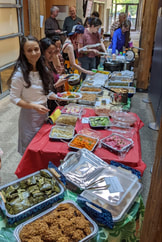
Malagasy Day, a celebration of Malagasy food, music, and games. The event was organized by students in the Malagasy course.
Picture
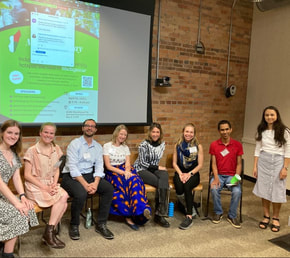
Caroline and I moderating a panel on ethical research collaborations in Madagascar, organized by Tendry.
With funding from Duke, I connected with other students to form a Malagasy working group on campus. While this endeavor was a step in the right direction, we were intent on learning more. I then joined forces with fellow Duke graduate student Caroline Shearer to advocate for the inception of a Malagasy language course at Duke. 

Fall 2022 marked the first semester of Duke's Malagasy course. Our teacher, Tendry Randriamanana, is a native Malagasy speaker with a PhD in plant biology. In addition to vocabulary and grammar, Tendry provided us with insights into Malagasy culture and history, including spear-heading Malagasy cultural events on campus. The class also fostered a tight-knit community of students with research interests in Madagascar, and I have been fortunate to collaborate with several of them on research projects. 

While I have finished the three-semester Malagasy course sequence, I continue to meet with Fidy to practice speaking, reading, and writing. I am still very much knee-deep in the learning process, and I am keen to continue.
Improvement can feel slow, and I sometimes feel discouraged by my rusty communication with collaborators between field seasons. Yet Malagasy language learning has been one of the most rewarding components of my PhD. I am grateful for the many people who have taught me along the way, from my teachers Fidy and Tendry to kind shop attendants and everyone in between. 

Misaotra betsaka! (Thank you very much!) 


0 Comments


Leave a Reply.

Proudly powered by Weebly
  • ABOUT
    • MOMBA AHY
  • CV
  • RESEARCH
  • PUBLICATIONS
  • Teaching
  • Media
    • Blog